ChatGPT’s source-picking process is partly visible in browser data
Two days of from one account showed part of how ChatGPT chooses sources for web-backed answers. The data covered about 1,240 source records, so the exact percentages should be treated carefully, but the repeated internal fields are meaningful. Each fetched web result had a result_source label, with four observed values: serp for ordinary web results, labrador for major publishers and sites, bright for a commercial scraper, and oxylabs for another scraper.
ChatGPT did not search the web for every question. When a question was classified under turn_use_case as text, it answered from stored model knowledge instead of fetching current pages, and even some questions that sounded time-sensitive fell into this path. For comparison tasks, the l split one question into roughly 15 to 40 smaller searches, checked pricing pages, guessed possible prices, and looked for clues such as currency symbols.
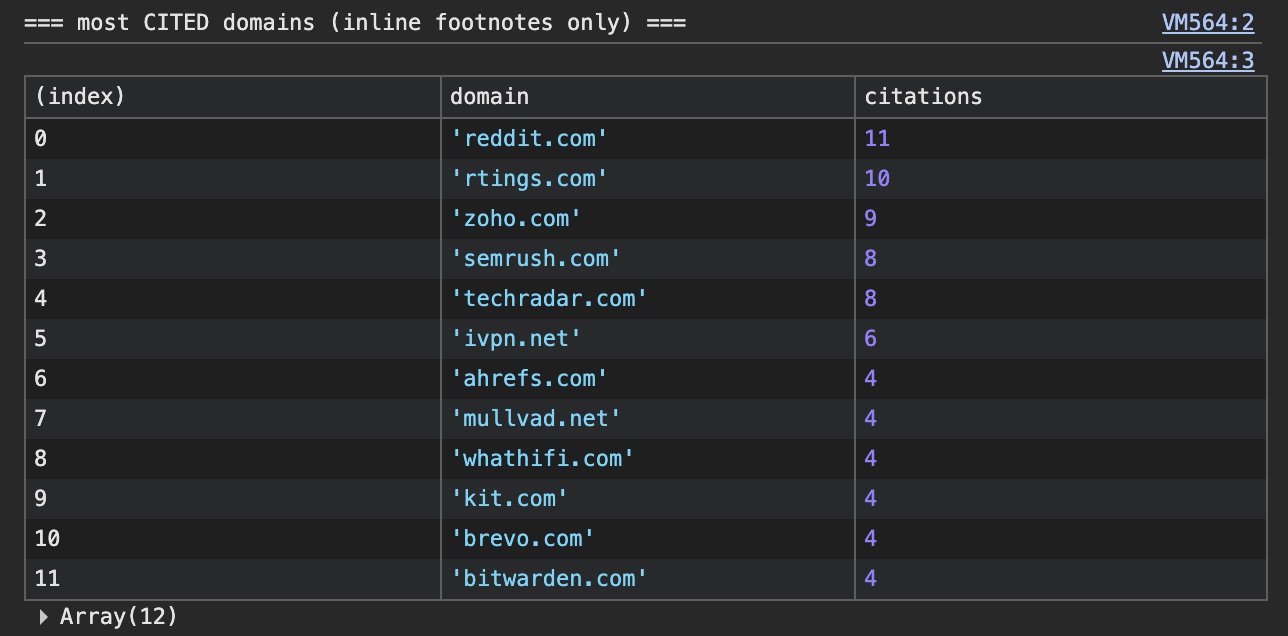
Being fetched, being cited, and being mentioned were separate outcomes. Reddit was more likely to become a cited source because the text is easy to read, while YouTube was often fetched but not cited because the model usually saw metadata rather than the full video content. If pricing or product details sit behind , ChatGPT may fail to read the official page and cite a site such as G2 instead.
Key points
- About 1,240 source records showed ChatGPT attaching a result_source label to fetched web results.
- Some questions were classified as turn_use_case text and answered without a .
- Comparison questions could turn into roughly 15 to 40 smaller searches, including direct checks of pricing pages.
- Fetched sources, cited sources, and mentioned brands are not the same thing.
- If key facts are hidden behind , ChatGPT may cite a page instead of the official page.