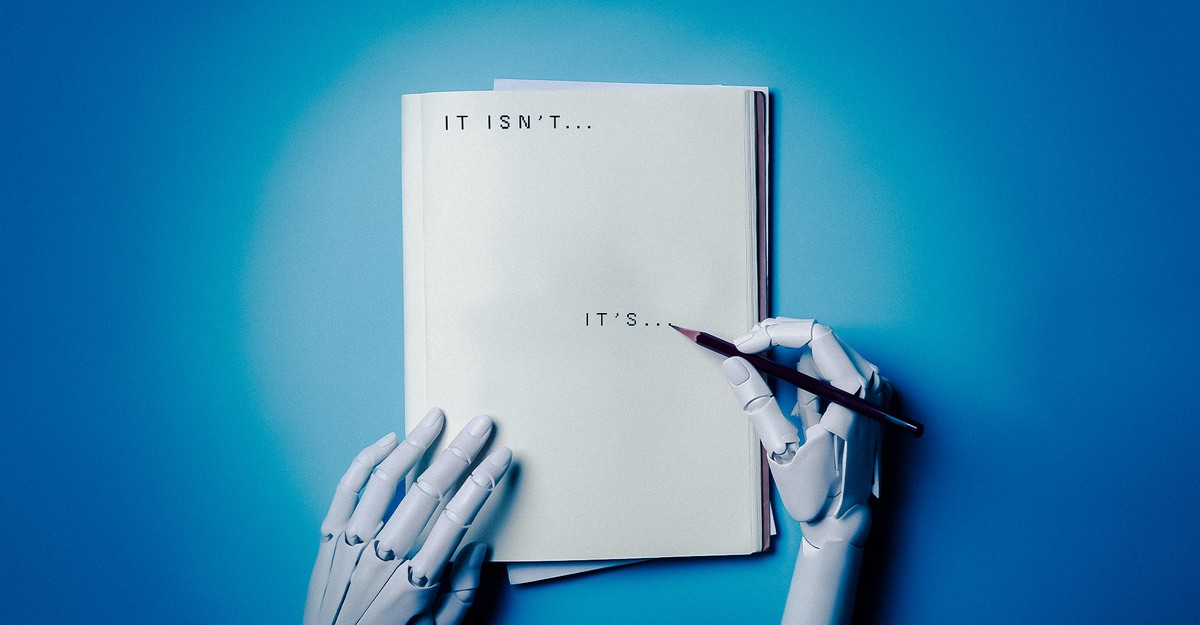
Why chatbots keep writing “It’s not X; it’s Y”
Major chatbots, including ChatGPT, Claude, Gemini, and , unusually often describe something by rejecting one label and replacing it with a stronger one: “It’s not X; it’s Y.” This pattern is commonly called . Its use in corporate communications more than quadrupled between 2023 and 2025, while AI-detection company Pangram estimates that “not just X but Y” appears about three times as often in AI writing as in human writing. No one knows the exact cause.
The pattern existed in human training material, and reviewers involved in may have rewarded it because it can make an answer sound thoughtful or nuanced. Chatbots also choose one token at a time, so rejecting a safe, obvious description before adding a sharper one may be easier than choosing a precise description immediately. Training newer models on writing can strengthen the habit, especially when AI systems also help grade the responses, creating a risk of .
OpenAI acknowledges that ChatGPT overuses the pattern and is working to broaden its writing style. For now, people can ban the structure in or ask another chatbot to remove it during editing. Research also suggests that AI writing habits are entering spontaneous human speech, which could eventually make this pattern less useful for identifying machine-written text.
Key points
- in corporate communications rose more than fourfold from 2023 to 2025.
- Pangram estimates that “not just X but Y” occurs about three times more often in AI writing.
- ChatGPT, Claude, Gemini, and several all use the pattern to varying degrees.
- and a separate editing pass can reduce the repetition.
- Reusing text as training material may make the habit harder to remove.